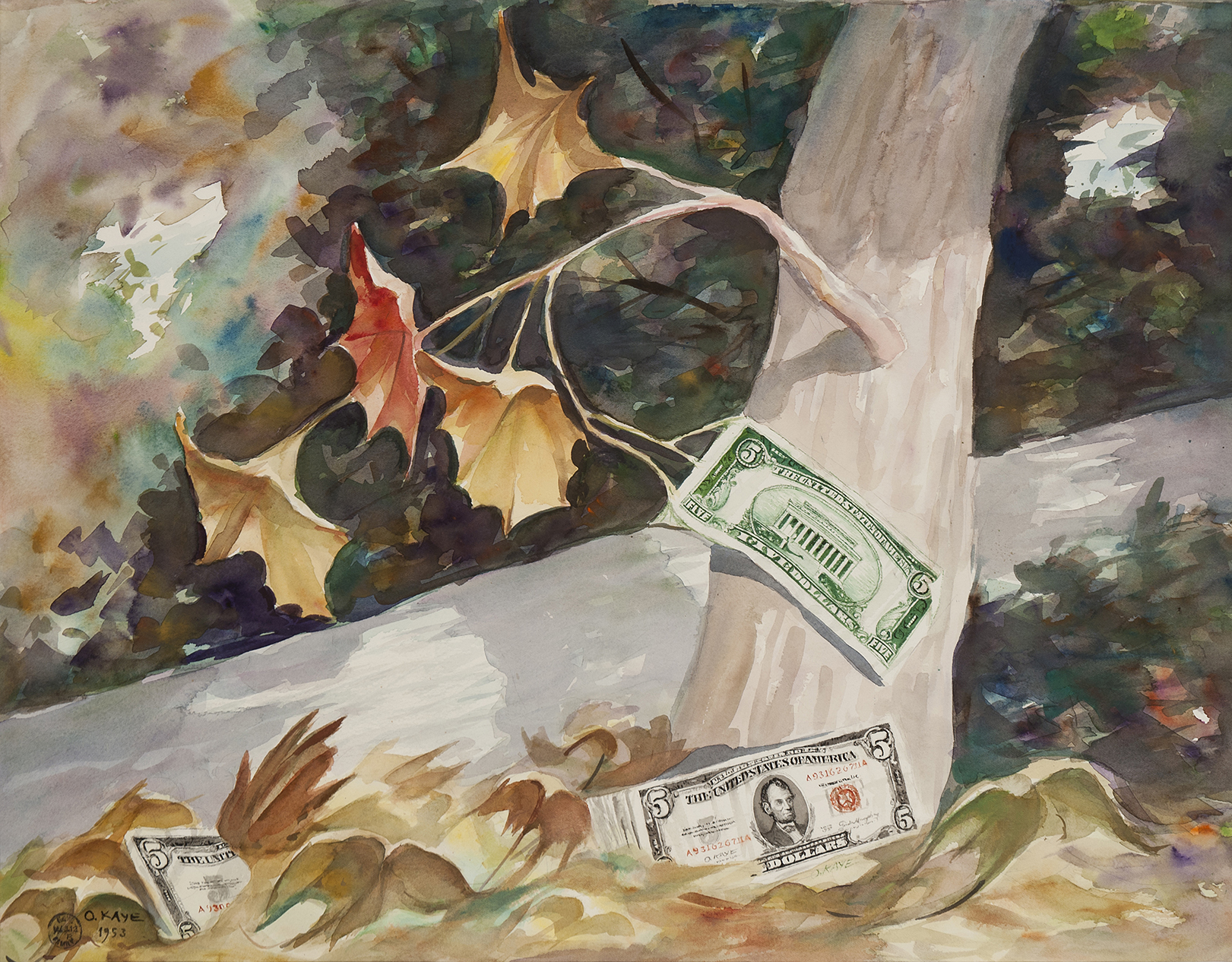
Otis Kaye‘s life is shrouded in mystery, his work filled with riddles and wry satire. Working mainly in Chicago in the mid-twentieth century, Kaye insinuated himself into the lineage of the largely dormant trompe l’oeil style of painting, along with significant works on paper, updating the art form by filling his work with emblems of his favorite themes: money, markets, and chance. Wealth and value are invoked through reproduced money, but also present in Kaye’s work is the theme of risk. A device that may be unique to Kaye’s work is his tracing the lines of stock charts, as in the bit of stock ticker tape traces the plunge referred to in the title of But Abe, I Told You to Buy Low. While trompe l’oeil’s popularity has waned since the turn of the twentieth century, Kaye’s art looks almost prophetic today. Many nineteenth-century illusion painters used reproductions of bills in their work, but in Kaye’s work the illusion often amounts to a riddle or joke. The imaginative conversation, across centuries, between Kaye, Rembrandt, and Karl Marx, in Checks and Balances is a masterful example. We are delighted to have a group of more than one dozen works by the artist, including large-scale oils and works on paper. Make an appointment to visit, or email for information on individual works.
News