June 1 - July 1, 2016
From June 1 through July 1, 2016, Menconi + Schoelkopf presents Stuart Davis (1892-1964), including ten important works from across the long and varied career of this important American modernist.
Stuart Davis (1892-1964) is a compact retrospective of one of the twentieth-century’s most celebrated visionaries. Stuart Davis’s career traces the growth of American art from turn-of-the-century Ashcan School to mid-century abstraction. His reinterpretation of cubism in the forties, fifties, and sixties—hard-edged planes of bright, cool colors and proto-pop distillations of consumer culture—have been so fully absorbed into popular consciousness that they seem inseparable from their era. This sophisticated vision was the product of decades of careful synthesis as Davis grappled with the meanings and means of modernism.
Stuart Davis remained active until the end of his life in 1964, helping to usher in a total transformation of American art. He was one of the youngest painters to be represented at the pivotal 1913 Armory Show, and was included in the Whitney Studio Club’s 1918 “Indigenous” American show. By 1964, New York had taken its place as the center of the art world, and the brisk abstraction Davis had helped invent was dominant. His embrace of consumer culture and graphic design anticipated Pop Art and its progeny, from Andy Warhol to Jean Michel Basquiat. As early as 1921, he was using the “Ben-Day” dots that would make Roy Lichtenstein famous, while his calligraphic black line can be found even in Keith Haring’s work. The soul of his work remains the carefully resolved picture: the balance of color, line, plane, and icon that tethers back to the early days of American modernism with persistent relevance today.
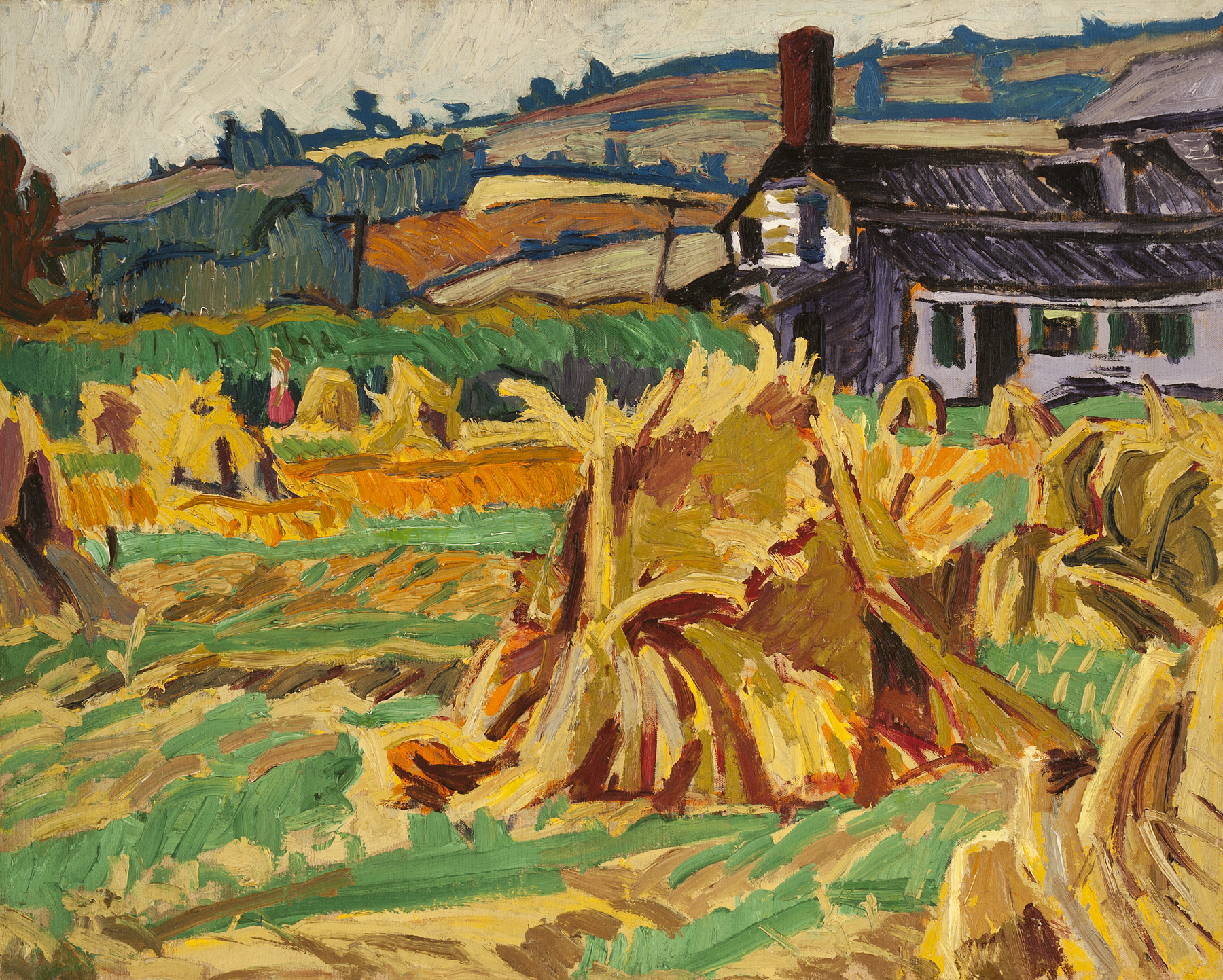
Menconi + Schoelkopf presents signal works in various media from each stage of Davis’s career, including little-seen masterworks from 1916 and germinal works from the Ashcan period. Davis turned his refocused his practice on drawing around 1930: works on canvas and paper will demonstrate his synthesis of line and plane. Also on view, works on canvas and paper from the last stage of Davis’s career, during which time he devoted himself to the interpretation of “the glamour of packaging,” developing his own lexicon of forms and pictograms to express the commercial landscape.